Why Your Admirals Cove Contract Needs Two Signatures, Not One
September 10, 2026
September 10, 2026
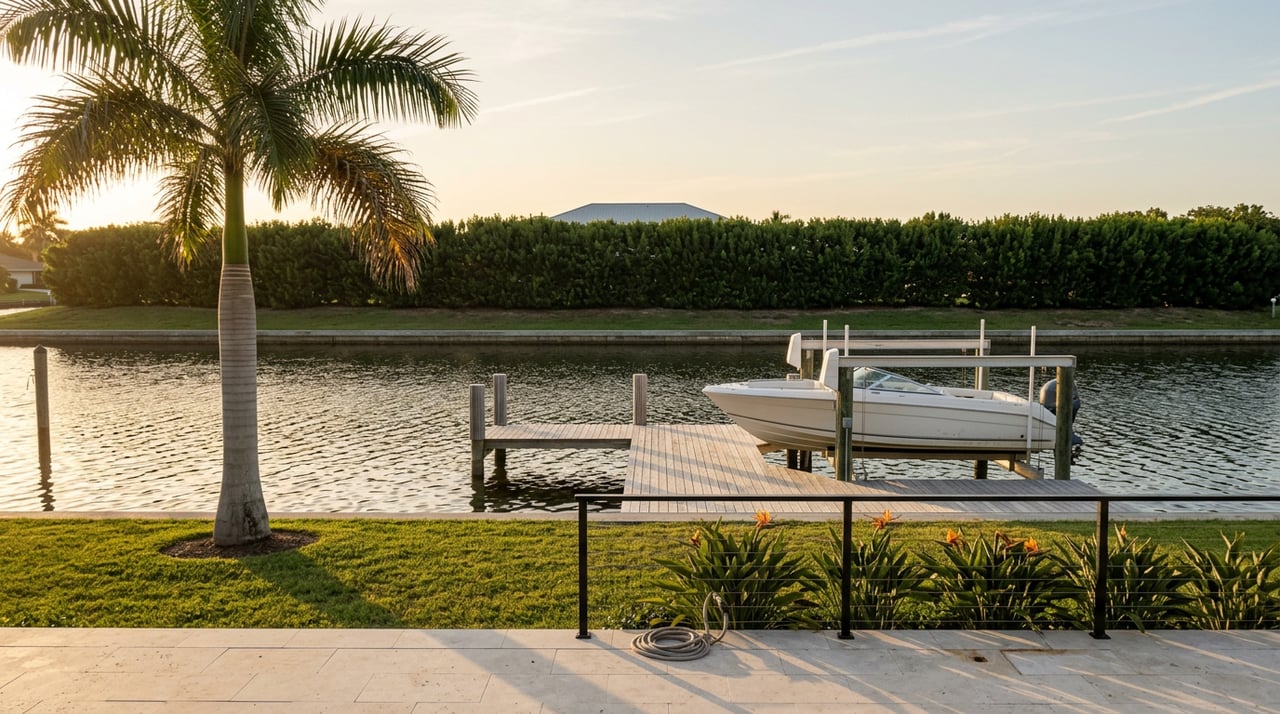
Ask a broker showing a waterfront estate on the East Side of Admirals Cove whether the dock behind the pool comes with the house, and the answer is almost always yes. Ask a second question, whether that dock is deeded to the property or reached through a separate marina membership, and the pause that follows says more than the listing sheet does.
That distinction rarely surfaces until a buyer is already under contract. In Admirals Cove, the water and the club are governed by two different organizations, priced through two different fee structures, and transferred through two different processes at closing. Most national guides to the community describe golf, boating, and the marina as one seamless lifestyle. What they leave out is that a buyer is actually agreeing to two separate memberships in two separate systems, and the gap between them is where the surprises live.
Admirals Cove operates under a split governance structure that most out-of-town buyers do not expect. The Club at Admirals Cove handles membership categories, golf operations, marina slip assignments, and dining. A separate entity, the Master Property Owners Association, handles community rules, Architectural Design Review for any dock or renovation project, and the sale processing every closing must pass through.
In practice this means a buyer signs paperwork with the Club to secure golf, tennis, or marina access, and separately clears a compliance review with the MPOA before the deed transfers. Two different offices, two different sets of bylaws, and two different points of contact during a transaction that a buyer assumes is a single purchase. Skipping past that structure during due diligence is the single most common way a closing gets delayed in this community.
Admirals Cove was developed in the 1980s on land that once belonged to philanthropist John D. MacArthur, built around more than five miles of navigable waterway that connects to the Jupiter Inlet and the Atlantic. The club's own marina page states that 85 percent of homes on the East Side sit on navigable water. That figure gets repeated often. What gets repeated less is that navigable water and a private, deeded dock are not the same thing.
A few real scenarios worth knowing before you write an offer:
The word "waterfront" on a listing tells you the house touches navigable water. It does not tell you whether the dock is yours outright, assigned through a membership with its own waitlist, or absent entirely. That confirmation has to come from the deed and the marina agreement, not the marketing copy.
The Club offers five membership categories: Golf, Sports, Tennis, Social, and Marina. Every one of them carries an equity fee plus annual dues, and here is where a buyer researching this community online runs into a real problem. Published figures for the same membership category do not agree with each other.
One widely cited source lists the full Golf Membership equity fee at $300,000 with roughly $40,000 in annual dues. A separate, more recent 2026 guide to Palm Beach County private clubs lists the same Golf Membership at $475,000. A third source quotes initiation fees as low as the high five figures depending on category. These are not typos. Club fee schedules at private communities like this one are revised periodically, are not published as public record, and the number a broker quotes you in March may not match the number the Club confirms in September.
The honest takeaway is not "the fee is $X." It is that any number you find in a blog post, including this one, should be treated as a starting point for a conversation with the Club's membership office, not a figure to build an offer around. Buyers who anchor a negotiation to an outdated equity fee number are negotiating against information that may already be stale by the time they are at the closing table.
The difference between a deeded dock and an assigned marina slip is not just a matter of convenience. It changes what the asset is worth and how a lender treats it.
A deeded slip is recorded real property. It can be bought, sold, and financed the way any other piece of real estate is, and it typically appreciates alongside the surrounding market. An assigned or leased slip through a marina membership is different: lenders generally will not count a leased slip toward loan collateral, and the arrangement can carry waitlists or transfer restrictions that a buyer only discovers by reading the marina bylaws directly, not the listing description.
A deeded berth does bring its own carrying costs, including a share of property tax, dock insurance, and seawall reserve assessments, but those costs are usually smaller over a decade than the rising cost of an assigned lease in a market where marina space is only getting scarcer. For a buyer choosing between two otherwise comparable Admirals Cove properties, the ownership status of the dock is a more consequential variable than the size of the pool.
MLS activity for Admirals Cove over the twelve months through August 2026 shows 50 homes changing hands, with an average asking price of roughly $8.37 million against an average selling price near $7.6 million, a list-to-sell ratio of about 91 percent. Homes carried a price near $1,266 per square foot and spent an average of 101 days on the market before closing.
Those numbers describe a market that rewards patience and precision, not urgency. A 101-day average and a 91 percent list-to-sell ratio suggest sellers who price correctly still see real negotiation, while sellers who overreach sit longer than the headline price would suggest. For a buyer, that window is exactly the time needed to confirm dock ownership status, request the current Club fee schedule in writing, and review the MPOA's Architectural Design Review file before removing contingencies.
A short list worth working through with your agent and, separately, with legal counsel before any offer goes in:
None of these questions are difficult to answer. They are just easy to skip when a buyer is moving quickly on a competitive property, and skipping them is exactly how a deeded-dock assumption turns into an unpleasant discovery three weeks before closing.
Is club membership mandatory to buy in Admirals Cove? Yes. Ownership in the community requires membership in one of the Club's five categories. The category and its associated cost should be confirmed directly with the Club rather than assumed from a listing remark.
Can I buy a home in Admirals Cove without a private dock? Yes. A meaningful share of properties, including many Harbor Homes and interior lots, do not carry a deeded dock. Boating access in those cases runs through the central marina and its own membership terms.
Are marina slips available to new owners right away? Availability varies and can involve a waitlist. Confirming current slip status with the marina office before closing is the only reliable way to know what you are actually buying.
A market like this rewards buyers who ask the second question, not just the first. If you are comparing Admirals Cove against other Jupiter waterfront communities and want a clear read on what a specific property's dock, membership category, and MPOA file actually include before you write an offer, Faxon and Stanko can walk through the details with you. Request a Private Consultation to start that conversation.
Stay up to date on the latest real estate trends.




We are the Premier Luxury Real Estate Team of South Florida. We specialize in luxury, golf and waterfront properties in South Florida. Combined, we have remarkable knowledge of real estate in the area.